Emilio Barzini
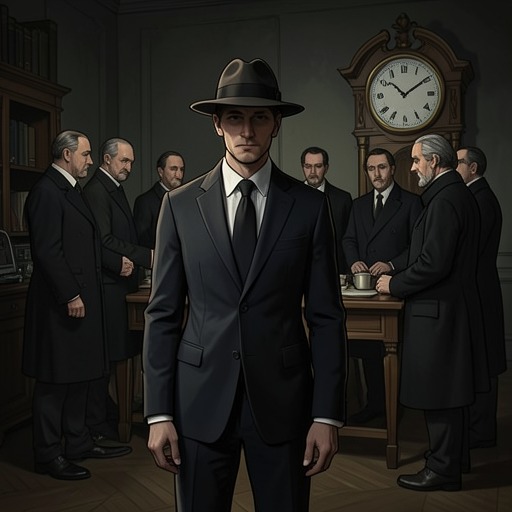
The GodfatherEmilio Barzini is the most powerful and strategically important opponent of Vito Corleone. The closest ally of the Tattaglia Family, he controls or shares interests across gambling, prostitution, strong-arm operations, narcotics, sports betting, and Staten Island, while maintaining connections with Cleveland, the West Coast, Las Vegas, Reno, Miami Beach, Cuba, Sicily, and possibly Wall Street. His reach makes him more than a New York rival: he is an interstate power broker whose ambition is to replace Vito Corleone as the country’s most powerful and respected Mafia leader and to absorb part of the Corleone empire.
Identity and Sphere of Power
Barzini’s operations span both illicit markets and the geography through which those markets move. He holds gambling interests in Brooklyn and Queens, sports betting in the Bronx and Westchester, prostitution and strong-arm businesses, and complete control of Staten Island. He is involved in narcotics and has the international and regional contacts needed to expand beyond the traditional New York territories. His interest in Las Vegas and Reno, described as the open cities of Nevada, marks him as one of the few leaders able to recognize where the future of organized crime lies. Unlike an old-fashioned local boss, he understands that influence, mobility, and diversified investment can matter as much as neighborhood loyalty.
He is repeatedly contrasted with the older style represented by Vito Corleone. Barzini is modern, sophisticated, and businesslike rather than a traditional old-line Mafia figure. He possesses great personal force, but his force is cold: he lacks Vito’s warmth and the intimate, paternal manner through which Vito turns favors into friendship and debt. Even so, Barzini is regarded at this point as perhaps the most respected man among the major leaders. His authority rests less on affection than on the scale, efficiency, and breadth of his network.
Hidden Role in the Conflict
Barzini supports the Tattaglia Family from the beginning of the war with money and influence, but his position is more important than the visible challenge mounted by Philip Tattaglia and Virgil Sollozzo. After the peace conference, Vito tells Tom Hagen that Barzini had a hand in the attack, even though he never openly committed himself. Vito’s judgment is that Tattaglia is too weak to have outfought Santino Corleone and that Barzini was the power behind the operation.
This concealed involvement defines Barzini’s method. He allows other men to expose themselves while he preserves room to negotiate with whichever side emerges strongest. His silence during the crisis is not passivity; it is insulation. At the conference he speaks curtly and without open insult, yet he turns the discussion toward the central demand of the Tattaglia-Sollozzo alliance: access to Vito’s judges, politicians, and legal protection for the narcotics trade. By presenting the demand as a matter of shared commercial survival, he transforms an aggressive expansion into a claim that the other Families should accept as practical necessity.
The Peace Conference
Barzini becomes the decisive voice in the settlement that ends the war of 1947. He argues that the Tattaglia interests cannot enter the drug business safely without Vito’s assistance, because judges and prosecutors who might respond to Vito’s favors would not necessarily respond to anyone else. The danger, as he frames it, is that severe narcotics penalties could cause captured men to break the Omertà and reveal the organization. His argument converts judicial influence into a collective resource, a well from which every Family must be allowed to draw.
The agreement permits drug traffic and requires Vito to provide legal protection in the East, while the Barzini and Tattaglia Families conduct most of the large-scale operations. The conference also declares Las Vegas and Miami Beach open cities for all the Families, prohibits violence there, restricts petty criminality, requires council approval for executions likely to provoke public outrage, and establishes mutual assistance in matters such as providing executioners or bribing jurors. Barzini’s diplomacy therefore does more than end an immediate war. It creates rules for a broader criminal economy and gives the most expansive organizations access to territories that will shape the future.
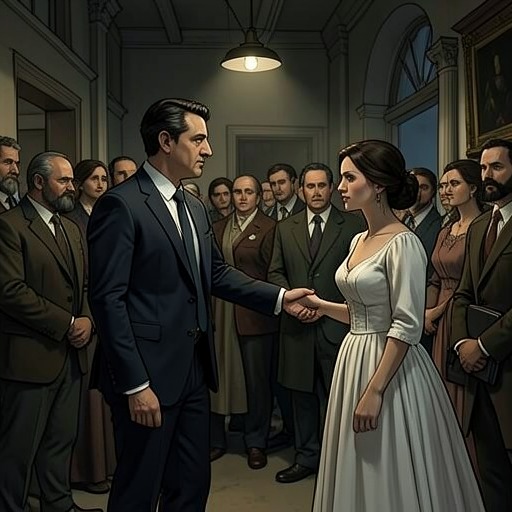
When Barzini closes the meeting, he publicly honors Vito as a man of his word and presents the settlement as a fresh road forward. His language of respect and reconciliation conceals the altered balance of power. Vito has been forced to accept a peace that sacrifices commercial interests for family survival and Michael Corleone’s safe return, while Barzini’s alliance has gained the legal protection and territorial openness it wanted.
Decline of the Corleone Family
The peace that Barzini helps construct accelerates the weakening of the Corleone Family. After Vito’s retirement, the Barzini Family is described as indisputably the strongest in the New York area, allied with the Tattaglias and occupying the position the Corleone Family once held. Barzini’s people steadily intrude upon Corleone gambling territories, test the Family’s reactions, and establish their own bookmakers whenever the response appears weak. The pressure is incremental rather than theatrical: power is taken by probing boundaries, measuring hesitation, and converting each unopposed incursion into a new fact.
The succession meeting in Vito Corleone’s library reflects this changed order. Michael Corleone has taken control, but the caporegimes cannot treat succession as automatically hereditary, and the Family’s earlier losses have damaged its authority. Barzini and the Tattaglias welcome Vito’s retirement because Michael, however formidable, cannot yet match Vito’s accumulated cunning and influence. Barzini’s advantage lies precisely in this interval, when the personal authority of the old Don has faded faster than the institutional strength of his rivals.
Defeat and Narrative Significance
Barzini’s final appearance places him in the physical orbit of Michael’s new power. On his way to meet Michael Corleone, he leaves the Plaza building with two bodyguards while Albert Neri, acting in the guise of a police officer, deals with a driver near his car. The scene brings Barzini’s elaborate network of protection into contact with a carefully prepared trap. His bodyguards and status cannot save him from an operation designed to exploit his expectations about police authority and ordinary street procedure.
His defeat completes Michael’s bloody victory. After a year of delicate political maneuvering, Michael becomes the most powerful Family chief in the United States, and the Corleone Family becomes unchallengeable. The New York operation is then closed and sold, while the Family’s power is reorganized around Long Beach and Las Vegas, with Rocco Lampone as a Corleone caporegime and Albert Neri directing security for the Family-controlled hotels. Barzini’s removal thus marks more than the fall of one rival. It clears the way for the Corleone Family’s relocation and consolidation under a more centralized, modern leadership.
Barzini’s importance lies in the contrast between appearance and design. He speaks for peace, shared interests, and orderly business while pursuing the displacement of Vito Corleone and the erosion of Corleone territory. He represents a newer form of organized power: less dependent on visible personal devotion, more dependent on networks, markets, legal influence, and calculated concealment. His rise exposes the vulnerability of Vito’s favor-based system, while his fall demonstrates that Michael Corleone has learned to answer such indirect power with an even more decisive form of organization.